
President Mahama Signs Five Key Bills into Law, Boosting Security, Education, and Finance Reforms
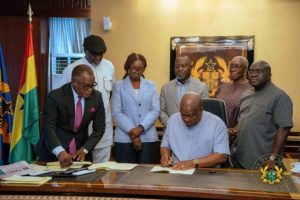
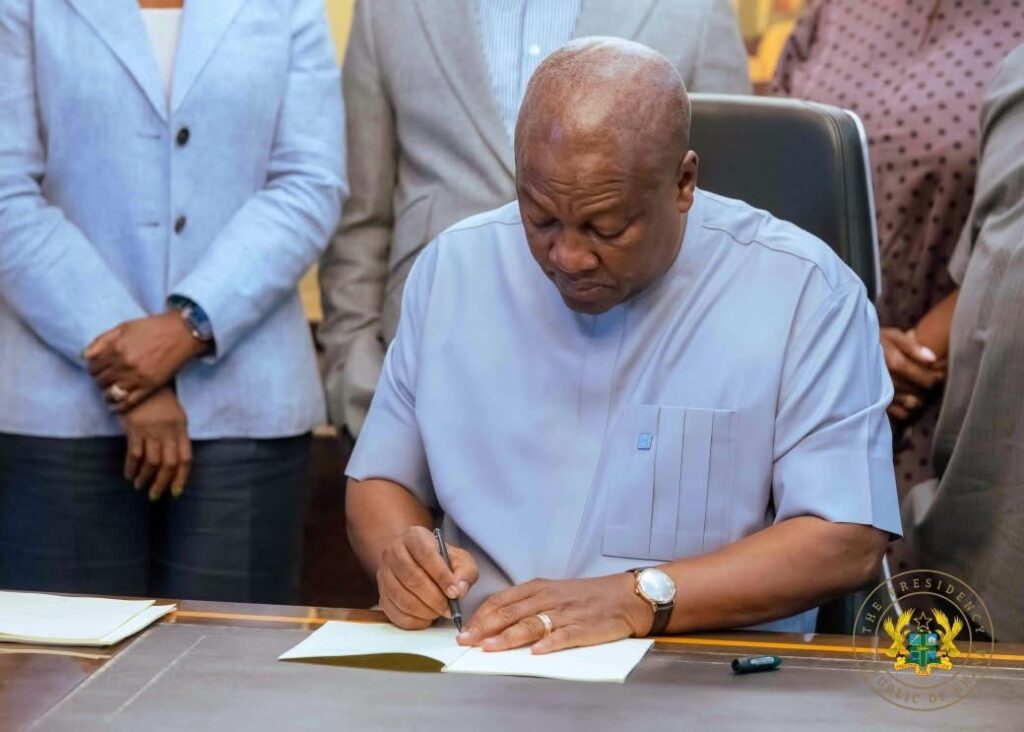
President John Dramani Mahama has assented to five bills passed by Parliament, marking a significant step in reforming Ghana’s security, education, and financial sectors. The legislation was signed into law on Tuesday, March 31, 2026.
The new laws include:
- Security and Intelligence Agencies Act, 2026
- University of Engineering and Agricultural Sciences Act, 2026
- Ghana Deposit Protection (Amendment) Act, 2026
- Growth and Sustainability Levy (Amendment) Act, 2026
- Education Regulatory Bodies (Amendment) Act, 2026
Security Reforms:
President Mahama explained that the Security and Intelligence Agencies Act abolishes the Office of the Minister of National Security, allowing the President to assign oversight of security agencies to any minister. The law also restores the Bureau of National Intelligence (BNI) name, clarifying previous confusion with the National Investment Bank.
Education Expansion:
The University of Engineering and Agricultural Sciences Act establishes a new public university with its main campus at Bonsu, Eastern Region, and satellite campuses in Ohawu, Oti Region, and Acherensua, Ahafo Region. The Education Regulatory Bodies (Amendment) Act provides greater flexibility for private tertiary institutions, including the option to obtain charters.
Financial and Fiscal Measures:
President Mahama highlighted that the Growth and Sustainability Levy (Amendment) Act reduces the levy on mining companies from 3% to 1%, implementing a sliding scale for royalties. The Ghana Deposit Protection (Amendment) Act extends deposit protection to mobile money wallets and other digital financial platforms, securing a wider range of digital assets.
The signing ceremony was attended by senior government officials, including Clerk of Parliament Ebenezer Ahumah Djietror, Secretary to the President Callistus Mahama, Attorney General Dominic Ayine, Chief of Staff Julius Debrah, Finance Minister Cassiel Ato Forson, and Vice President Jane Naana Opoku-Agyemang.