
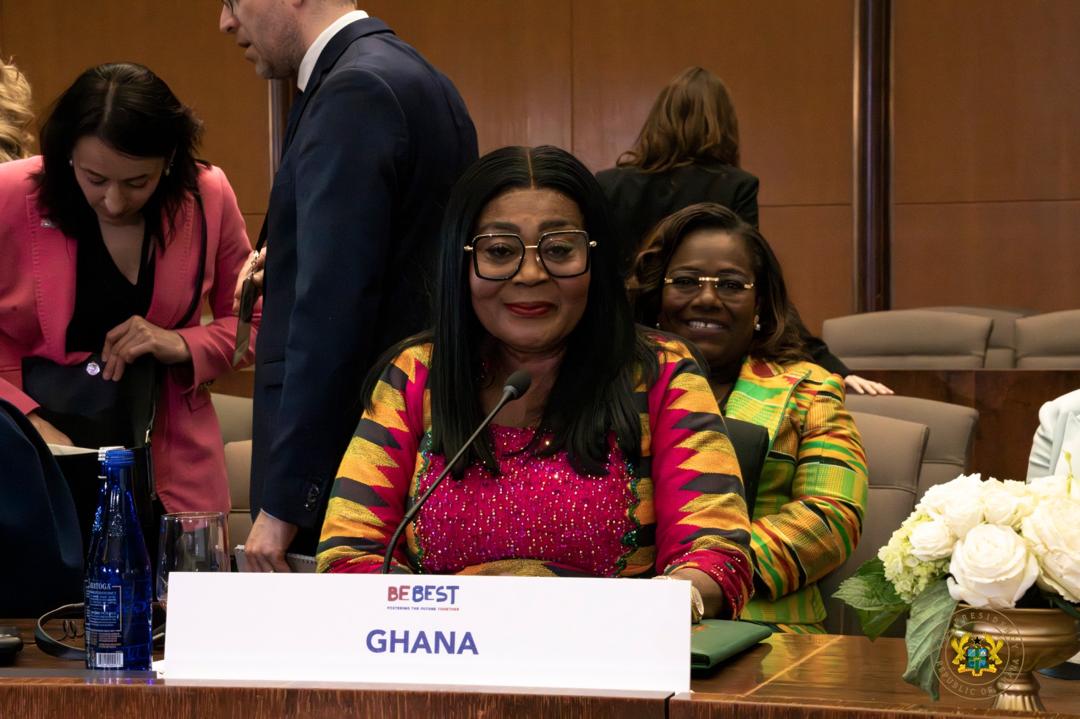
Lordina Mahama, Ghana’s First Lady, has called on global leaders to make child protection a top priority, noting that while digital technology offers vast opportunities, it also exposes young people to serious risks worldwide.
Speaking at the Fostering the Future Together Global Coalition Summit in Washington, D.C., she expressed gratitude to US First Lady Melania Trump for organising the event and shared a personal story to highlight the double-edged nature of technology.
She recounted Ghana’s 69th Independence Day on 6 March, which also marked her birthday, explaining how she received numerous TikTok messages from young Ghanaians who celebrated with dances and birthday wishes online.
According to her, many of these messages came from individuals who could not attend the national event in person, but were still able to participate through digital platforms, demonstrating how technology can amplify voices across the country.
Mrs. Mahama also pointed to the rapid growth of the digital space, noting that nearly 70% of the global population now uses social media. In Ghana, between 8 and 15 million internet users are largely young people.
Referencing President John Dramani Mahama’s Independence Day speech, she highlighted that today’s generation has access to powerful tools, with smartphones serving as platforms for learning, business, creativity, and global connectivity.
Despite these benefits, she warned that technology can be harmful without proper supervision, citing studies indicating that one in five young victims of cyberbullying avoids school because of their experiences.
In response, Ghana has taken steps to strengthen laws, enhance enforcement, and introduce the ‘Safer Digital Ghana’ campaign to promote awareness and curb online abuse.
Mrs. Mahama stressed that safeguarding children in the digital age is a shared global responsibility and a moral obligation.
The two-day summit aims to strengthen international collaboration on online child protection, building on frameworks such as the UN’s Children and Digital report and the European Union’s Digital Services Act.
Ghana’s efforts are guided by its 2025 national strategy, which includes digital literacy programmes in schools and partnerships with companies like Meta and Google to improve content moderation.
With internet penetration at 68%, according to GSMA data, Ghana is emerging as a leader in Africa in balancing digital growth with protections against threats such as sextortion, misinformation, and online abuse.
