

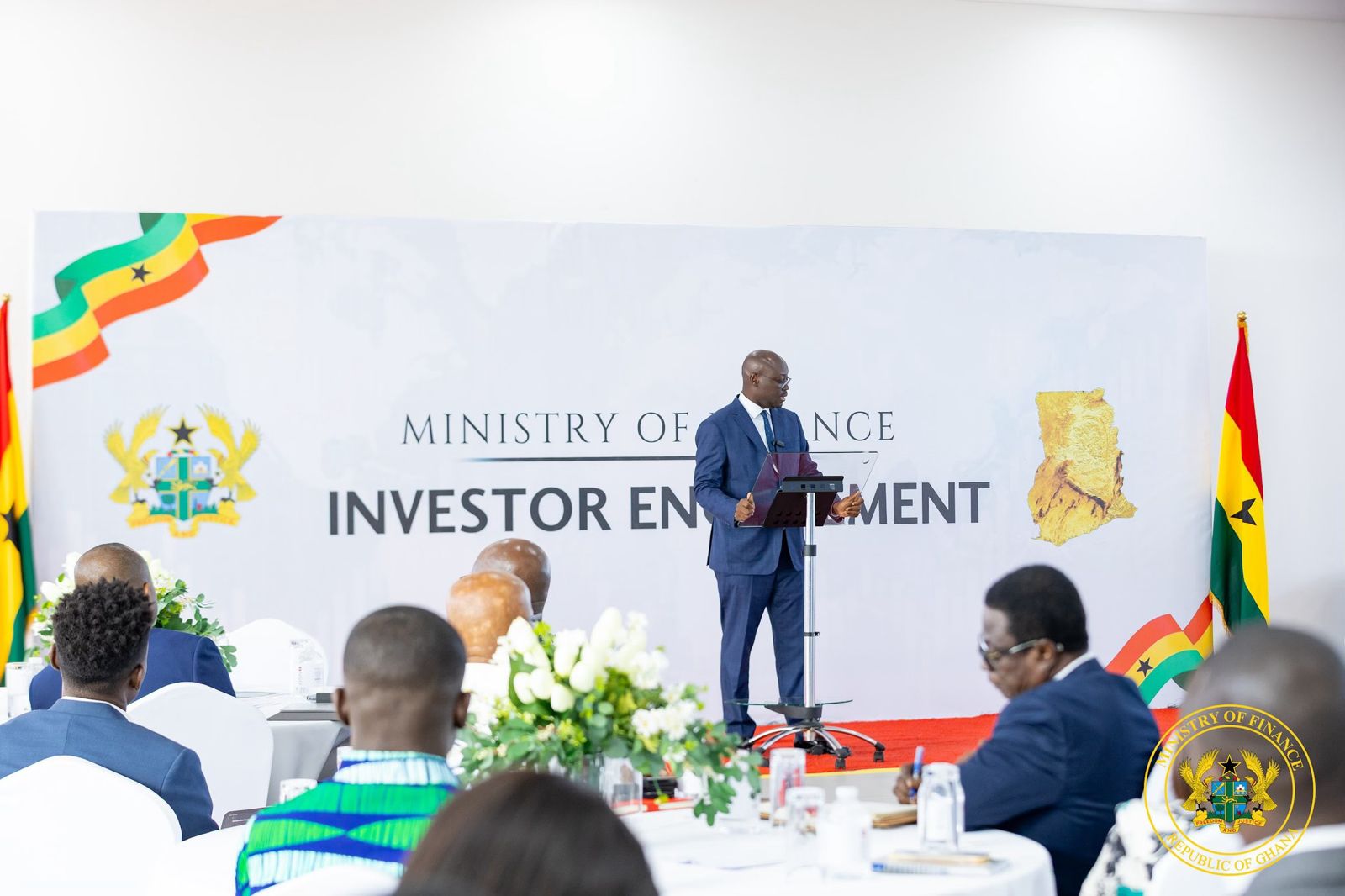
The Ministry of Finance has organised its first investor town hall meeting since 2021, bringing together investors, bankers, and bond market experts as part of renewed efforts to restore confidence in Ghana’s economy and debt market.
In his opening remarks, Chief Director Patrick Nomo described the forum as a significant step forward, expressing confidence that the country would avoid a return to debt default. He reaffirmed the Ministry’s dedication to transparency, credible policymaking, and continuous engagement with investors.
Finance Minister Cassiel Ato Forson told participants that the economy is on a steady path to recovery, supported by improving macroeconomic indicators and prudent fiscal management.
He highlighted progress made since the Domestic Debt Exchange Programme (DDEP), including multiple successful reviews under the International Monetary Fund programme, with disbursements exceeding US$700 million. He also noted Ghana’s upgraded sovereign credit rating to B- with a stable outlook, alongside the timely servicing of both domestic and external debts, including more than US$1.4 billion in Eurobond payments in 2025.
According to the Minister, inflation has dropped significantly to 3.3 percent, reaching its lowest level in years, while economic growth has rebounded, driven by strong performance in the real sector. He added that fiscal consolidation efforts are back on course, with a primary surplus recorded without undermining key social and infrastructure spending.
Presenting the 2026 macroeconomic outlook, Dr. Forson described the targets as realistic and attainable. He noted that government revenue is increasingly driven by domestic sources, with non-oil tax revenue contributing over 80 percent of total inflows.
On debt management, he outlined proactive strategies to address refinancing risks, particularly for obligations maturing in 2027 and 2028. These measures include strengthening the Sinking Fund, allocating portions of non-oil tax revenue, and implementing debt reprofiling to ease repayment pressures and lower interest costs.
He also pointed to ongoing reforms aimed at enhancing transparency, such as the regular publication of issuance calendars and improved communication with market stakeholders. Additional steps are being taken to bolster cash reserves and ensure stability in the domestic bond market following the end of DDEP-related issuance restrictions.
The session concluded with an interactive discussion, where participants engaged the Minister and his team on fiscal policy, debt sustainability, and market prospects. Many attendees indicated renewed confidence in the management of the economy and welcomed the government’s emphasis on transparency, discipline, and consistent engagement.
