

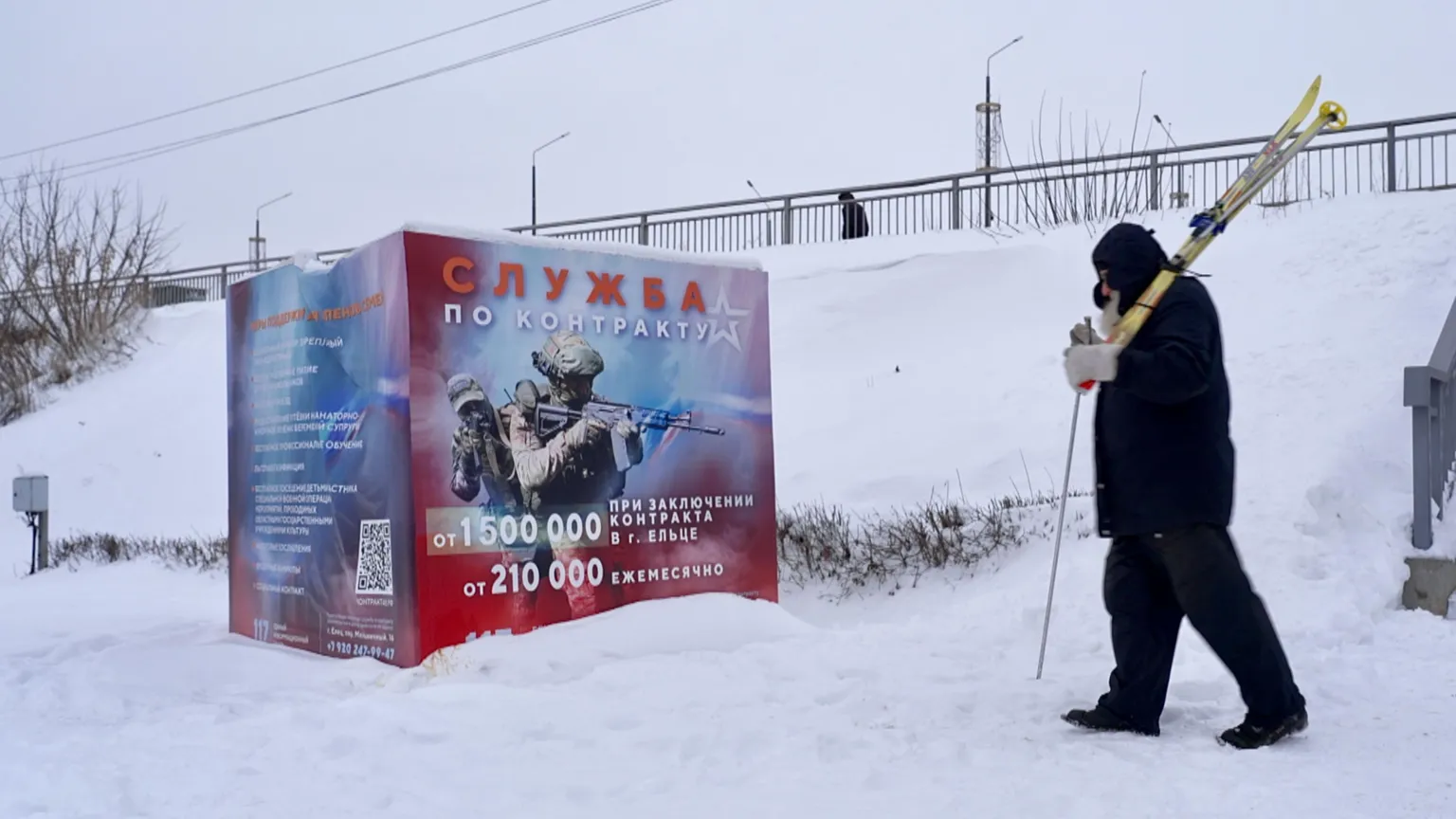
In Yelets, 350 km south of Moscow, the impact of Russia’s four-year war in Ukraine is visible, from army recruitment posters to murals honoring local soldiers killed in the conflict.
Posters and billboards promoting army recruitment are impossible to miss. One promises a hefty one‑off sum, the equivalent of about £15,000, to anyone who signs up to fight in Ukraine, alongside imagery of armed soldiers with slogans like “We’re there where we need to be.”
When the Kremlin launched its full‑scale invasion of Ukraine on 24 February 2022, Western analysts widely viewed it as a swift operation intended to bring Kyiv back into Moscow’s sphere of influence and overturn the post‑Cold War security order in Europe. Instead, the war has dragged on for four years, becoming Europe’s longest land war since World War II’s Eastern Front, with fierce fighting, heavy casualties, and grinding attrition on both sides.
In towns like Yelets, residents are feeling the economic strain of a war that Moscow assumed would be short and decisive. Small business owners speak of rising prices, increased taxes, and shrinking local demand, all of which have squeezed profits and slowed growth. Many Russians find that everyday life has become harder as prices for basic goods and services rise.
Even among those who support the conflict, there’s a grudging acknowledgment that the costs, economic and personal, are mounting. Some older residents say they would be willing to fight if they were younger, yet complain about tight wallets and rising living costs that erode any sense of gain from the conflict.
The war has inflicted massive losses on both sides. Recent assessments estimate that combined casualties could approach around 2 million by spring 2026, with heavy equipment and personnel losses far outstripping Russia’s initial expectations. Russia’s battlefield advances have been slow, with minimal territorial gains since 2024, highlighting the difficulty of achieving rapid strategic victories despite enormous sacrifices.
Ukraine, for its part, remains resilient and continues to defend its territory despite Russian assaults, particularly with newer strategies involving drone warfare, trench fighting, and long‑range strikes targeting supply routes and infrastructure.
