

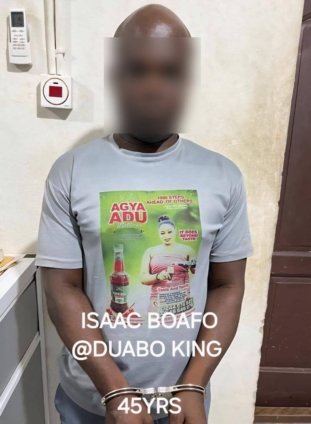
 A popular Ghanaian TikTok personality known as Duabo King has been arrested following allegations that he made false claims against police officers in a series of online posts.
According to reports, the arrest comes after authorities reviewed viral content in which the TikToker allegedly made accusations targeting members of the Ghana Police Service. Law enforcement officials say the claims were found to be unsubstantiated, prompting an investigation that led to his detention.
Duabo King, who has built a following on TikTok through commentary and trending videos, reportedly used his platform to level serious allegations against specific officers. The videos quickly gained traction, drawing mixed reactions from social media users, with some demanding accountability and others urging caution until facts were verified.
Police sources indicate that the statements were deemed misleading and potentially damaging to the reputation of the officers involved. Authorities have emphasized that spreading false information, particularly about security agencies, can have serious legal consequences.
In the wake of the arrest, law enforcement officials have reiterated the importance of responsible social media use. They noted that while citizens have the right to express concerns and report misconduct, making unverified or false accusations can undermine public trust and disrupt order.
The police have not yet disclosed the specific charges Duabo King may face, but legal experts suggest that offences relating to the publication of false information or causing public alarm could be considered if evidence supports the claims.
The incident has reignited debate about freedom of expression versus accountability in the digital age. As social media platforms continue to amplify individual voices, concerns are growing over the spread of misinformation and its potential impact on institutions and individuals.
Supporters of stricter enforcement argue that influencers must be held to the same legal standards as traditional media practitioners. Others, however, stress the need for transparency and due process to ensure that arrests do not suppress legitimate criticism.
As investigations continue, the case of Duabo King underscores the increasing scrutiny facing online personalities and the legal responsibilities that come with digital influence.
