

What Is Dr. Martin Luther King Jr. Day?
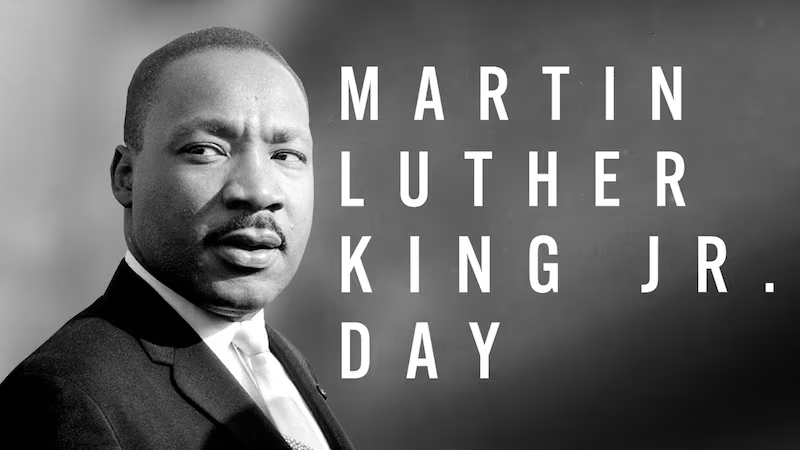
On Monday, January 19, 2026, the United States observes Dr. Martin Luther King Jr. Day. This is a federal holiday honoring the life, work, and legacy of the civil rights leader whose vision reshaped America.
A Day of Reflection
Dr. King’s birthday, January 15, 1929, now falls close to the third Monday in January. Federal law designated this date to honor Dr. King’s lasting contributions to civil rights, social justice, and nonviolent activism. MLK Day carries a unique emphasis as a “National Day of Service.” It is quite different from most holidays that commemorate historical figures with parades and public ceremonies alone. This framing encourages citizens to reflect on King’s ideals through hands-on community engagement and civic action.
Across the country, communities have planned an array of activities, from marches and parades to service projects and cultural forums. In Houston, Texas, two historically separate MLK parades have unified for the first time in over three decades. This brings together diverse communities under a shared heritage of justice and solidarity. Colleges, cities, and civic organizations are hosting lectures, concerts, and commemorative services reflecting on King’s philosophy and its relevance today. In Boston, the theme “Justice Indivisible: Fighting Racism, Greed, and War” highlights the depth of King’s critique of societal inequality. Volunteer days tied to environmental cleanup, food distribution, and educational mentoring are proliferating, turning remembrance into action. These events sustain an active interpretation of King’s message. One that goes beyond applause and symbols to community commitment and collective responsibility.
Dr. King is best remembered for his leadership in the Civil Rights Movement and his articulation of an inclusive, equitable “beloved community.” But contemporary coverage suggests his legacy is also being reclaimed and recontextualized within today’s social and political climate. Advocates, including King’s daughter Bernice King, emphasize the holiday’s importance as a “saving grace” amid deepening political divisions and growing concerns over civil rights retrenchment. She and other leaders stress that poverty, racism, and militarism – the “three evils” King warned against – remain pressing challenges in modern America. This year’s discussions also reveal tension over how King’s image is used. Some commentators argue that celebratory parades and corporate sponsorship may dilute his more radical critiques of economic inequality and militarism, urging deeper engagement with his full body of work.
In the Workplace and Daily Life
MLK Day remains a federal holiday, meaning many government offices, banks, and schools close in observance. However, conversations on social platforms show a range of experiences: some workers still receive the day off, while others in private sectors or essential industries may not. This dual reality echoes a broader point: honoring King’s legacy isn’t confined to a calendar date — for many, it’s lived in workplaces and communities year-round.
What unites celebrations in 2026 is a sense that Dr. King’s message continues to speak to struggles for justice today — from racial equity and voting rights to economic fairness and community empowerment. Whether through service projects, educational activities, or public reflection, MLK Day offers an opportunity not just to remember a historical figure, but to act on the unfinished work of justice he championed.
