
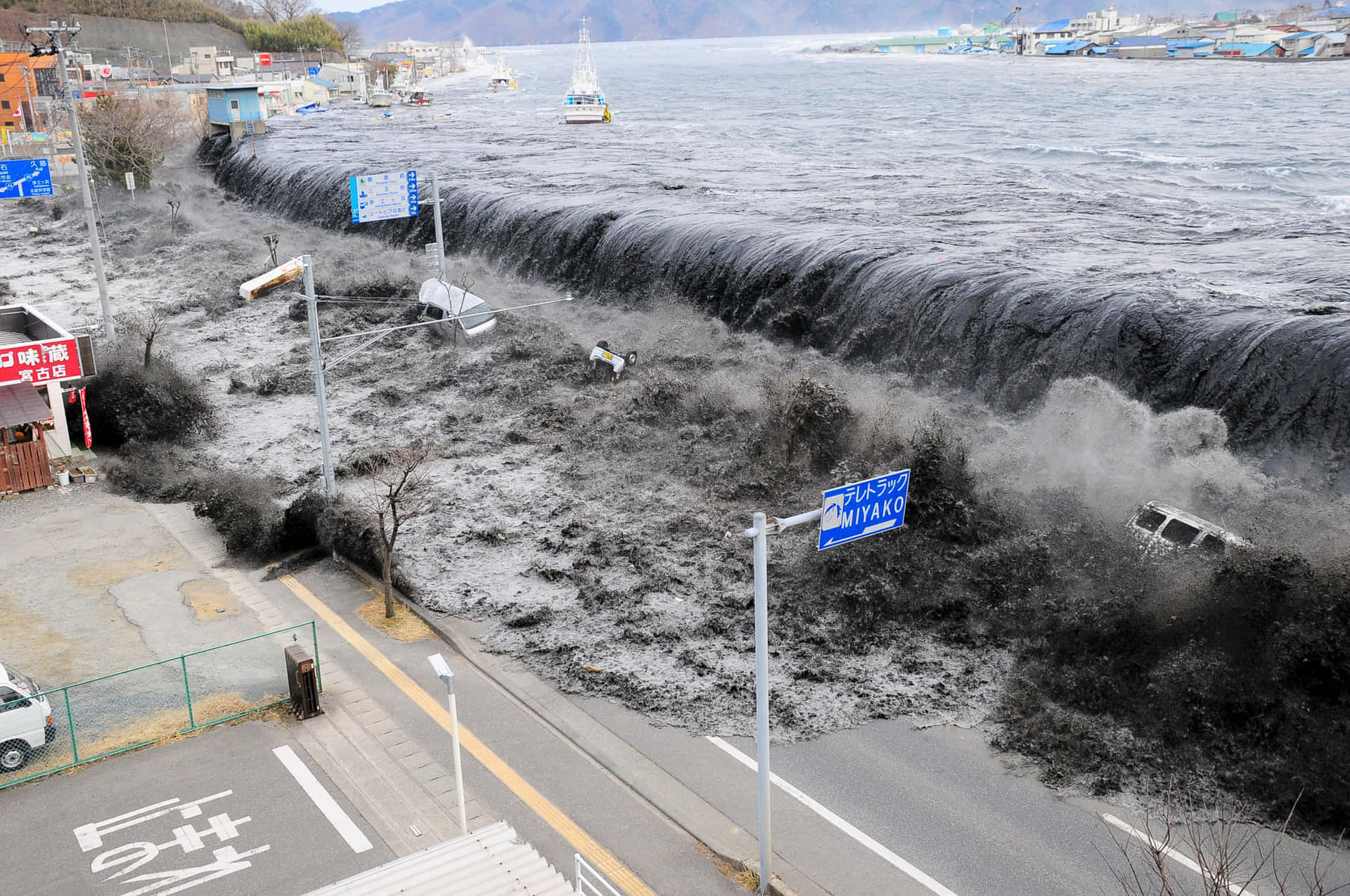
A strong earthquake struck Japan on April 20, 2026, shaking the northern coastal region of Honshu and triggering immediate tsunami warnings. The quake, measured at around magnitude 7.7, occurred offshore near the Sanriku region along the Japan Trench, one of the most seismically active zones in the world.
The tremor was shallow, which made it feel more intense on land. Residents in several prefectures, including Iwate, Aomori, Miyagi, and Hokkaido, reported strong shaking that lasted several seconds.
Shortly after the quake, the Japan Meteorological Agency issued tsunami warnings, predicting waves of up to 3 metres along parts of the coastline.
Although the initial threat caused widespread alarm, actual tsunami waves were much smaller—peaking at around 80 centimetres in some ports—leading authorities to downgrade and later lift most warnings.
Still, the government ordered or advised evacuations for more than 170,000 people across affected coastal towns as a precaution.
The earthquake caused major temporary disruptions. Bullet train (Shinkansen) services were suspended in parts of northern Japan, highways were closed, and ferry operations were halted while safety inspections were carried out.
In cities such as Aomori and Iwate, residents reported swaying buildings, falling objects, and brief power outages. Emergency services were quickly deployed to check for damage and assist evacuees.
Despite the strength of the quake, early reports suggest limited casualties and no major structural collapse. Only minor injuries were reported during evacuations, and no nuclear plant abnormalities were detected.
Authorities confirmed that while some buildings were damaged and coastal activity was heavily disrupted, the impact was far less severe than past disasters such as the 2011 Tōhoku earthquake and tsunami.
In the aftermath, the Japan Meteorological Agency issued a rare advisory noting a slightly increased chance, about 1% compared to the usual 0.1% of a larger magnitude 8+ earthquake in the coming days or weeks.
Officials stressed that this is not a prediction, but a precaution based on seismic activity patterns. Residents in coastal areas have been urged to stay alert and prepare emergency supplies.
Japan sits on the Pacific Ring of Fire, where several tectonic plates meet, making it one of the most earthquake-prone countries in the world. This means earthquakes of varying strength occur frequently, and tsunami preparedness remains a constant national priority.
While this latest earthquake did not result in major destruction, it has once again highlighted Japan’s vulnerability to powerful seismic events. It also reinforces the country’s strict early-warning systems and disaster readiness, which are among the most advanced in the world.
For now, life is gradually returning to normal, but authorities continue to monitor aftershocks and maintain heightened awareness along the northern coastline.
