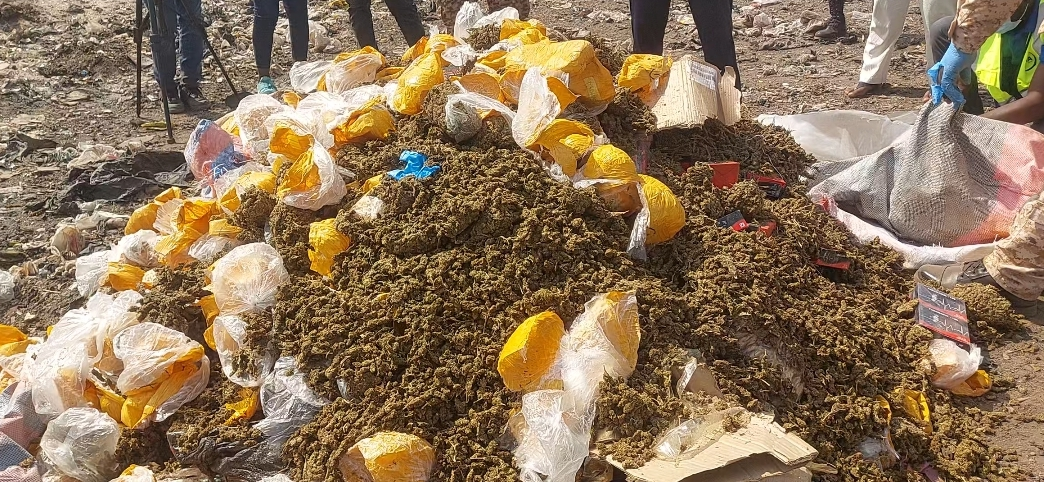
More than 2.5 million Ghana cedis’ worth of illicit drugs have been destroyed by the Narcotics Control Commission (NARCOC) in Tamale, following a series of successful operations against drug trafficking and distribution networks operating in the Northern Region.
The drugs, which were seized from distributors over a period of time, were destroyed after the courts convicted the suspects to various custodial sentences and fines. The exercise, according to authorities, forms part of sustained efforts to rid the region of narcotic substances that continue to pose a serious threat to public health and security.
Sixty-four boxes and thirteen blisters of Tafrado 120mg, valued at an estimated GHS159,160 on the black market; 260 boxes and eight blisters of TramaKing, valued at GHS781,200; thirty blisters of Tramadol, estimated at GHS900; eleven boxes of Royal 225mg, valued at GHS33,000; and marijuana, valued at approximately GHS83,160, are among the destroyed items. Security agencies say such seizures have become a daily affair in Tamale, highlighting the scale of the illicit drug trade and the growing demand for narcotic substances within the metropolis. The operations are being led by a special police taskforce initiated by the Inspector-General of Police, popularly known as “Black Maria,” working closely with NARCOC and other allied security agencies.
Several traffickers, distributors, and users have been arrested and charged as a result of the intense crackdown. Some perpetrators are currently in jail while others have received fines from the courts. According to authorities, the goal is not simply to punish criminals but also to break up drug distribution networks and prevent the spread of drugs, especially among youth. The Northern Regional Commander of the Narcotics Control Commission, Isahak Bakuri, has reiterated that there will be no room for the smuggling and distribution of illicit drugs in the region. He emphasized that security agencies will continue intelligence-led operations to identify, arrest, and prosecute persons involved in the drug trade.
Beyond the law enforcement successes, analysts say the frequent seizures reflect a deeper social challenge, as illicit drugs continue to gain a strong foothold among the youth in the Northern Region. Substances such as tramadol, tafrado, and marijuana have become increasingly common, with experts linking their abuse to youth unemployment, peer pressure, and the search for temporary relief from economic and social stress.
Peter Amadu Gmintiri, a clinical psychologist, calls the situation “sad and worrying,” cautioning that drug usage is progressively undermining the mental well-being and prospects of many young people in the area. He points out that long-term psychological illnesses, family dissolution, increased criminality, and school dropouts are all frequently caused by addiction. Mr. Gmintiri is calling for a stronger emphasis on rehabilitation, stressing that while arrests and convictions are important, they do little to help those already hooked on narcotic substances. According to him, the cost of rehabilitation is high and often beyond the reach of affected families.
As a result, he argues that as part of restorative justice and punitive measures, those found guilty of smuggling and distributing illegal substances have to be held financially responsible for victim rehabilitation. He believes this will act as a warning to others in addition to helping pay for rehabilitation. The psychologist further revealed that the Northern Region faces inadequate psychological services and a shortage of rehabilitation centres, making it difficult to effectively address addiction. He is urging government and stakeholders to invest in training more mental health professionals and establishing additional rehabilitation facilities to meet the growing demand.
As security agencies intensify enforcement and destruction exercises continue, experts insist that a holistic approach, combining law enforcement, rehabilitation, public education, and youth empowerment, will be critical in tackling the drug menace. Without sustained intervention, they warn, illicit drugs could continue to undermine the safety, productivity, and future of the region’s youth.
