

A critical crisis is unfolding at the Korle Bu Teaching Hospital as Medical Laboratory Professional Workers have begun a phased industrial action, with a complete shutdown of all services scheduled for next week.
On Wednesday, February 4, 2026, the Medical Laboratory Professional Workers’ Union (MELPWU) Korle Bu chapter formally began a “sit-down strike” in all hospital laboratories. This initial phase, which will last until Sunday, February 8, has drastically reduced services, expected to affect thousands of outpatients.
The union has instructed its members to turn down any outpatient department (OPD) cases during this time, per the strike notice that Chapter Chairman John Kofi Nakoja signed. Only a skeleton staff has been nominated to handle emergency cases for existing in-patients. The union has also warned that samples requiring follow-up beyond February 8 will not be accepted, signaling a wind-down of operations.
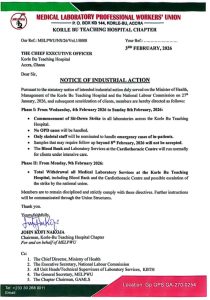
Only patients in critical care are now receiving critical services at the hospital’s blood bank and laboratory at the cardiothoracic center. The situation is set to escalate severely starting Monday, February 9, 2026. In this second phase, the union has announced a total withdrawal of all medical laboratory services across the entire Korle Bu Teaching Hospital.
The previously exempted Blood Bank and Cardiothoracic Center laboratories will also be affected by this widespread strike, thereby stopping a vital diagnostic function of the hospital. The notice also warns of a “possible escalation of the strike by the national union.” On January 27, 2026, the National Labour Commission, the Hospital Management, and the Minister of Health received a formal notice of intended action, which prompted the industrial action.
While the specific grievances prompting the strike were not detailed in the public notice, such actions typically stem from unresolved disputes over conditions of service, allowances, or working conditions. The strike threatens to bring non-emergency hospital operations to a standstill and will severely impact the diagnosis and monitoring of patients, leading to delayed treatments and postponed surgeries.
