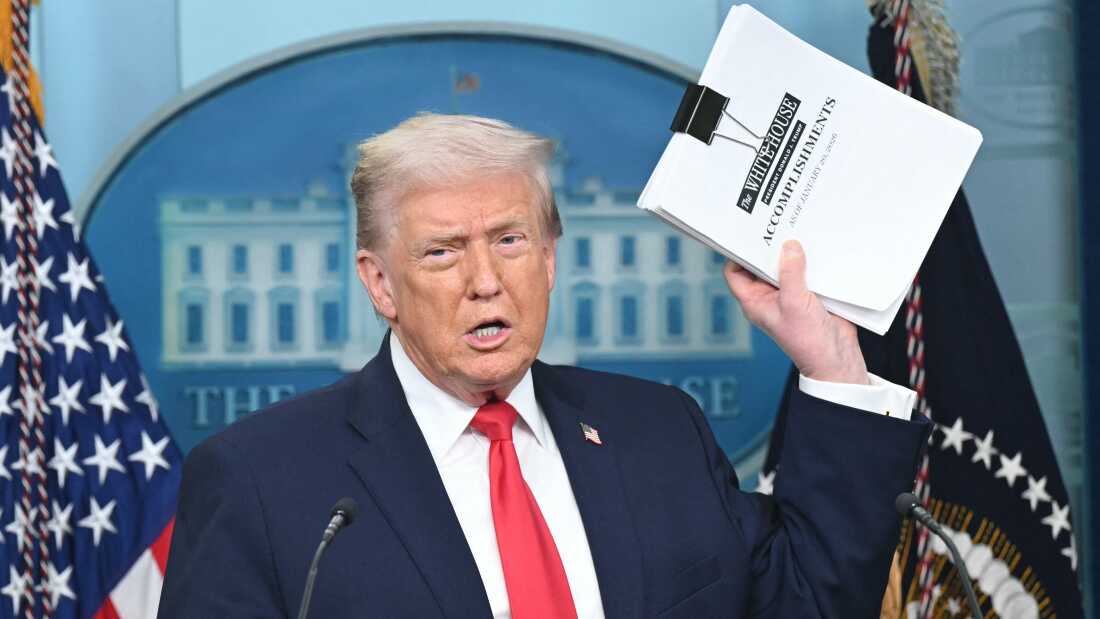
 President Donald Trump reversed course on his highly controversial threat to impose tariffs on key European allies late Wednesday, announcing that he would not move forward with punitive import duties after asserting that a “framework of a future deal” had been established on Greenland and broader Arctic cooperation with NATO leadership.
Speaking from the world Economic Forum in Davos, where world leaders and economic officials have gathered this week, Trump said he and NATO WSecretary‑General Mark Rutte had reached foundational understandings on Greenland that could evolve into a comprehensive agreement. Based on that outcome, he said he was cancelling tariffs scheduled to begin on February 1 against eight European NATO allies that had balked at his earlier demands.
Trump did not provide specific details about what the framework includes, other than suggesting that it related to security cooperation in the Arctic and that further talks would continue “down the line.” In remarks to CNBC, he described the emerging understanding as something the U.S. and its allies would find “very good” and long‑lasting, but declined to say whether it involved changing Greenland’s political status.
The tariff threat had been part of a broader push by Trump to press European countries especially Denmark over his long‑standing interest in acquiring Greenland, a semi‑autonomous territory of the Kingdom of Denmark. Trump’s demands and use of tariff leverage sparked alarm in Europe, raised the prospect of a damaging transatlantic trade confrontation and even prompted the European Parliament to pause a major U.S., EU trade agreement in response to the coercive tactics.
Earlier this week, Trump had also appeared to flirt with more aggressive rhetoric about Greenland’s strategic value, framing the vast Arctic island as central to U.S. national security amid competition from Russia and China. But on Wednesday he explicitly ruled out using military force to seize the territory a statement that brought relief after days of escalating tensions.
While the pause in tariff plans was welcomed by many European leaders as a de‑escalation, officials in Denmark and Greenland have been adamant that sovereignty over the island is non‑negotiable. Danish Prime Minister Mette Frederiksen reaffirmed that Denmark’s territorial integrity cannot be compromised and emphasized that any security cooperation will take place within those bounds.
NATO’s own statements have refrained from validating Trump’s claim of an enforceable deal. Secretary‑General Rutte noted that discussions focused on strengthening collective Arctic security, and that the question of Greenland’s political status was not part of their talks. Rutte said NATO’s Arctic agenda calls for allied contributions to defense efforts a move he said was welcomed by many members given shared concerns about Chinese and Russian activity in the high north.
Analysts say Trump’s announcement represents both a tactical retreat from a dangerous standoff with allies and a transition to longer‑term negotiations on Arctic security cooperation. But critics argue that the lack of clarity about what the “framework” actually entails leaves open questions about U.S. goals, the future of the transatlantic alliance, and the potential for renewed tensions if negotiations falter.
For now, markets responded positively to the news, easing earlier fears of a tariff‑induced trade war with Europe but the broader diplomatic and strategic implications of Trump’s shifting Greenland strategy are likely to unfold in the coming weeks.
