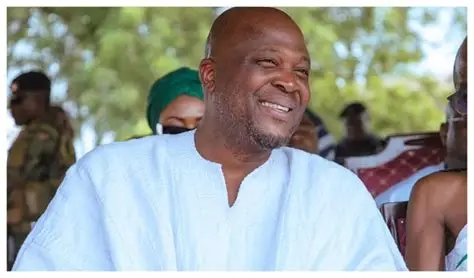
Ibrahim Mahama has long been a significant figure in Ghana’s private sector, particularly within mining and infrastructure. As the founder of Engineers and Planners Limited (E&P), he built one of West Africa’s most influential indigenous mining services companies. Over the years, his work has placed him in close partnership with major multinational mining firms, giving him both industry experience and national visibility. He is also widely known as the brother of former President, a connection that often draws additional public attention to his business dealings.
The main reason Ibrahim Mahama is currently trending is the high-profile takeover of the Damang Gold Mine by his company. This move represents a major shift in Ghana’s mining industry. For decades, large-scale gold mines in the country have largely been controlled by foreign companies, with local firms playing supporting roles. Now, E&P stepping in as a primary operator signals a transition toward greater Ghanaian participation at the highest level of the sector.
This development has sparked widespread national interest because it challenges the long-standing structure of the mining industry. It is not just another contract win, it is a symbol of local capacity stepping into a space traditionally dominated by global corporations.
Following the takeover, Mahama outlined an ambitious development plan for the Damang enclave. He spoke about transforming the mining area into a thriving economic zone, complete with improved infrastructure and social amenities. Among the promises are major investments in healthcare, transportation, and community development projects.
These commitments have fueled both excitement and skepticism. Supporters see it as a long-overdue opportunity for mining communities to benefit directly from resource extraction. Others, however, are waiting to see whether these pledges will materialize within the stated timelines.
Beyond the immediate business implications, this moment has triggered a deeper national conversation about who truly benefits from Ghana’s natural resources. Mahama himself has emphasized that Ghanaian companies should move beyond being contractors and begin owning and operating major assets.
That message resonates strongly in a country where resource control has historically leaned toward foreign investors. His success is being interpreted by many as a test case for whether local businesses can compete at the highest levels and manage complex operations effectively.
As expected, the development has not been without controversy. Given his family ties to politics, some critics have questioned whether the process that led to the takeover was entirely free from influence. At the same time, government officials and some civil society voices have defended the decision, insisting that due process was followed.
This mix of business achievement and political sensitivity has amplified public interest. It has turned what could have been a purely corporate story into a national issue, debated across media platforms and among ordinary Ghanaians.
Ultimately, Ibrahim Mahama’s current prominence reflects more than just one deal. It highlights a turning point for Ghana’s private sector and raises important questions about the country’s economic future. If his company succeeds in managing the Damang Mine efficiently while delivering on its development promises, it could open the door for more Ghanaian firms to take on similar roles.
If it fails, however, critics may use it as evidence that such large-scale operations should remain in the hands of established multinational players. Either way, the spotlight is firmly on him, making this one of the most closely watched business stories in Ghana today.
