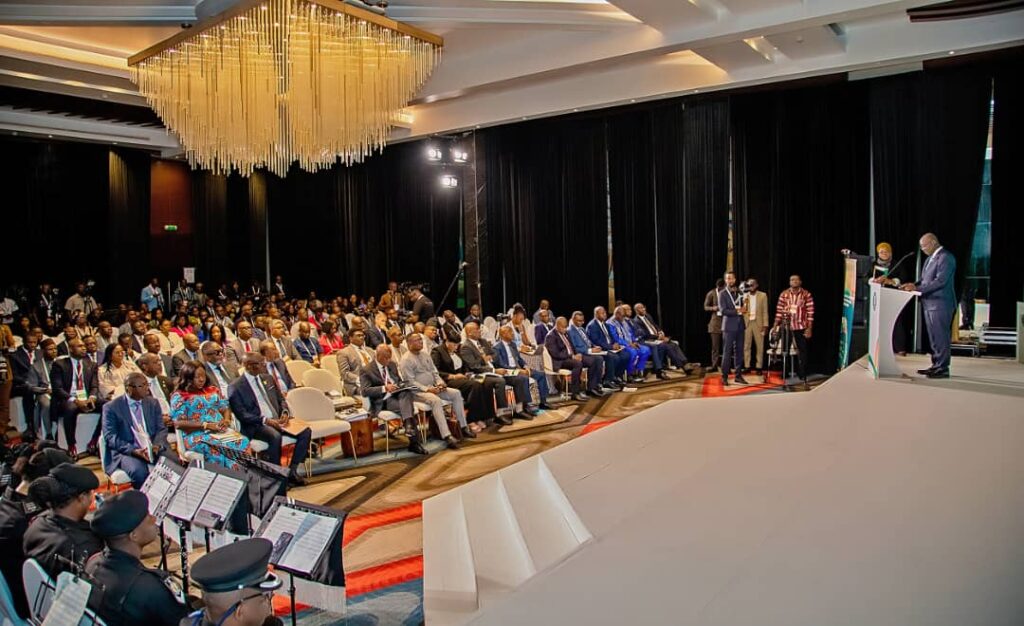
The President of the ECOWAS Bank for Investment and Development (EBID), Dr George A. N. Donkor, has emphasized the critical role of regional integration and structural reforms in sustaining economic stability across West Africa amid ongoing global uncertainties.
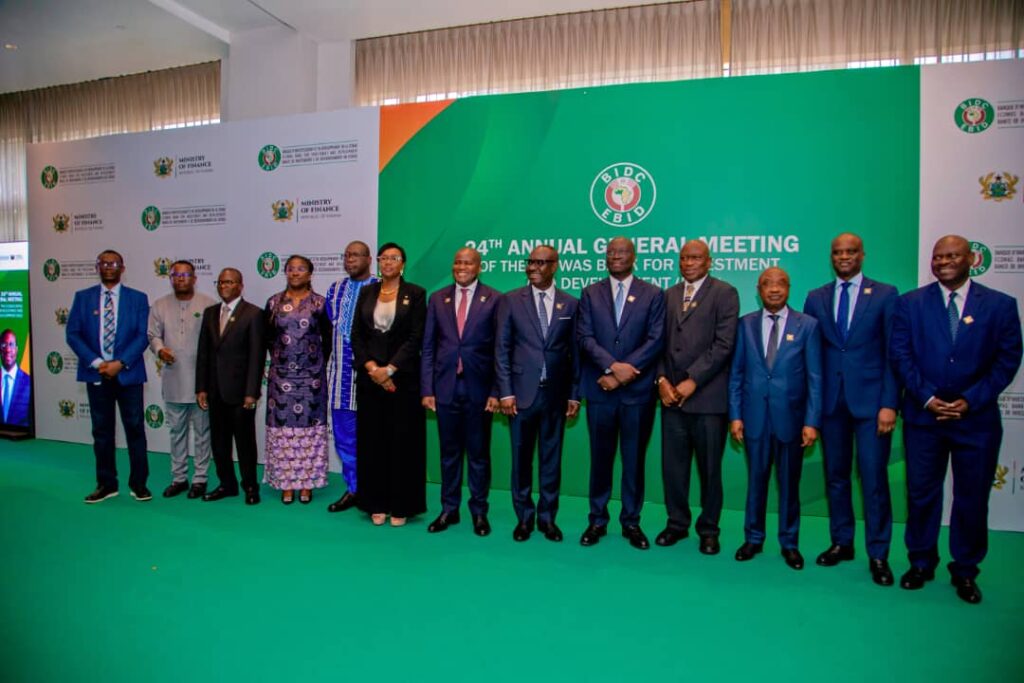
Speaking at the 24th Ordinary Session of the Board of Governors in Accra, Dr Donkor noted that while the global economy has demonstrated resilience, it continues to face mounting risks driven by geopolitical tensions and trade disruptions.
He explained that global economic output in 2025 remained modest but stable, supported largely by strong performance in a few advanced and emerging economies. However, he cautioned that uncertainty in trade policies and persistent geopolitical challenges could weigh on future growth.
Dr Donkor also observed that global inflation is gradually easing, although the pace of decline varies significantly across different economies, reflecting uneven recovery patterns worldwide.
Turning to developments within West Africa, he indicated that the region continues to record steady economic growth, supported by favourable commodity prices and ongoing macroeconomic reforms.
According to him, ECOWAS economies are projected to achieve a combined GDP growth of 4.8 percent in 2025, with the broader West African region expected to expand by 5.7 percent.
Despite these positive indicators, Dr Donkor highlighted persistent structural challenges that could hinder long-term progress. These include rising public debt levels and relatively slow per capita income growth, particularly in the context of rapid population expansion and increasing labour force pressures.
Amid these challenges, he noted that EBID has continued to strengthen its institutional framework and maintain investor confidence. The Bank has retained favourable credit ratings from international agencies, reflecting its resilience in a complex operating environment.
In addition, EBID has achieved key milestones in expanding its operational capacity, including accreditation from the Green Climate Fund and certification under the European Union’s nine-pillar framework. These recognitions position the Bank to manage international development funds with greater independence and efficiency.
Dr Donkor expressed optimism about the region’s prospects, stressing that sustained collaboration among member states
