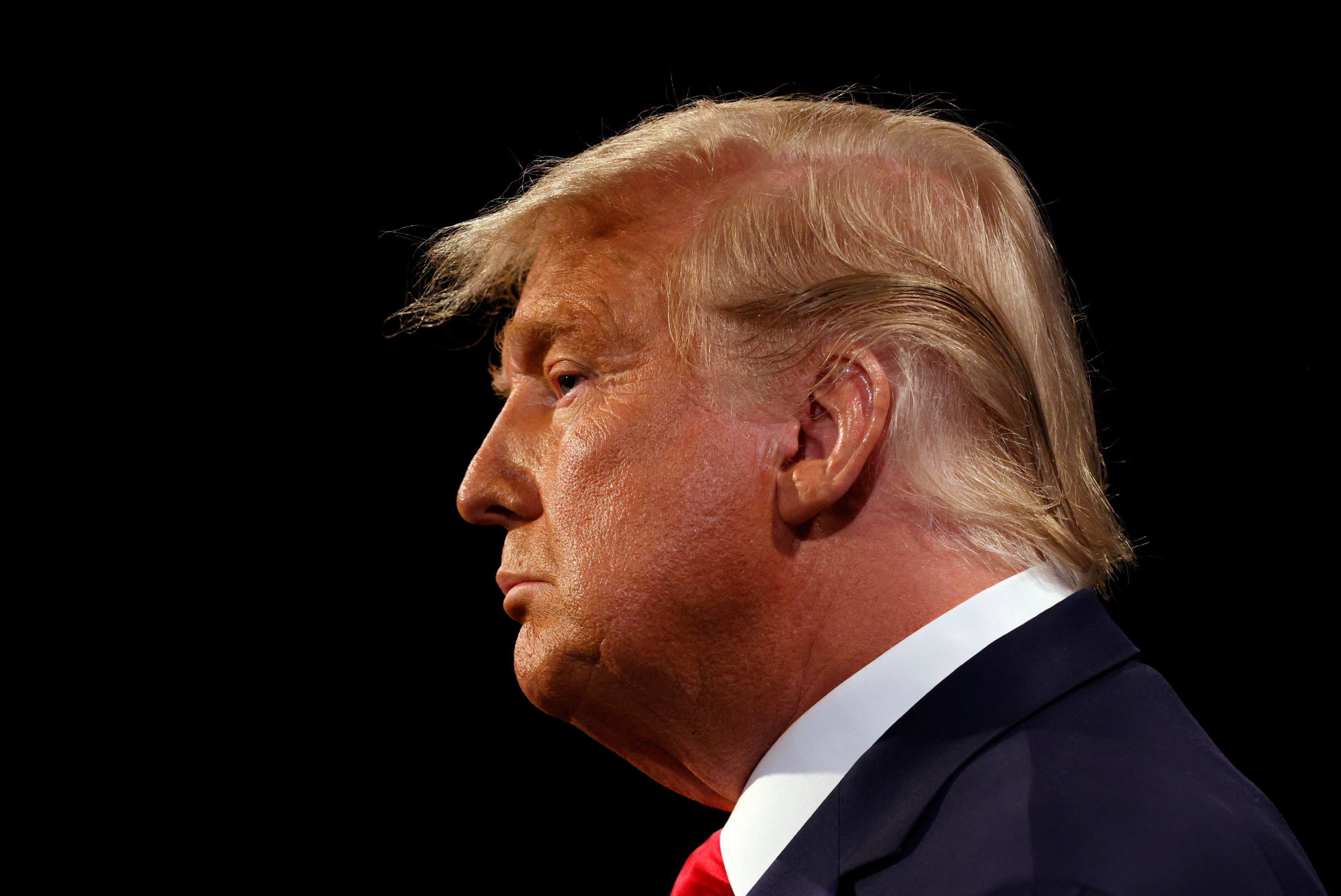
US President Donald Trump has warned that the US could strike Iran “in one night” if Tehran fails to meet his deadline to reopen the Strait of Hormuz, a vital route for global energy supplies.
The deadline for an “acceptable” agreement, which would ensure the free flow of oil through the Gulf, is set for 20:00 Washington DC time on Tuesday (00:00 GMT Wednesday).
At a White House news conference with Defence Secretary Pete Hegseth and Joint Chiefs of Staff Chairman Gen. Dan Caine, Trump expressed hope that “reasonable” Iranian leaders were negotiating in good faith but admitted the outcome remained uncertain. Iran has dismissed proposals for a temporary ceasefire, instead demanding a permanent end to hostilities and the lifting of sanctions.
Trump highlighted the recent rescue of two F-15 crew members shot down in southern Iran as a “heroic” operation but reiterated his threat that the US could target Iran’s energy and transportation infrastructure if the Strait remains closed. “The entire country can be taken out in one night – and that night might be tomorrow night,” he said, adding that failing to comply could set Iran back to the “Stone Ages,” destroying bridges and power plants.
Despite Iran’s rejection of US demands, Trump remained cautiously optimistic about ongoing negotiations, following a series of strikes that killed senior Iranian leaders. A regional official familiar with the talks said meaningful progress was unlikely without a ceasefire, noting that communication with Iranian officials was hampered by blackouts and delays in responses, sometimes taking a full day.
Pakistan, Turkey, and Egypt have been involved in mediation efforts, though Trump declined to provide details of the US strategy, saying only that he had “the best plan.”
Legal experts have warned that deliberate attacks on civilian infrastructure could constitute war crimes. Tess Bridgeman, a former Obama-era National Security Council legal adviser, told CBS that destroying power plants or threatening civilian populations to pressure a government would be “flatly illegal.” Trump, however, said he was unconcerned about that assessment and insisted Iran’s people would accept suffering in pursuit of freedom, without intending to topple the government.
Trump also criticized key allies, including the UK, NATO, and South Korea, for not assisting the US during the conflict. “That’s a mark on NATO that will never disappear,” he said, adding that the US does not “need” the UK.
Since the start of the conflict, US forces have carried out more than 13,000 strikes across Iran, according to the latest update from Central Command.
