
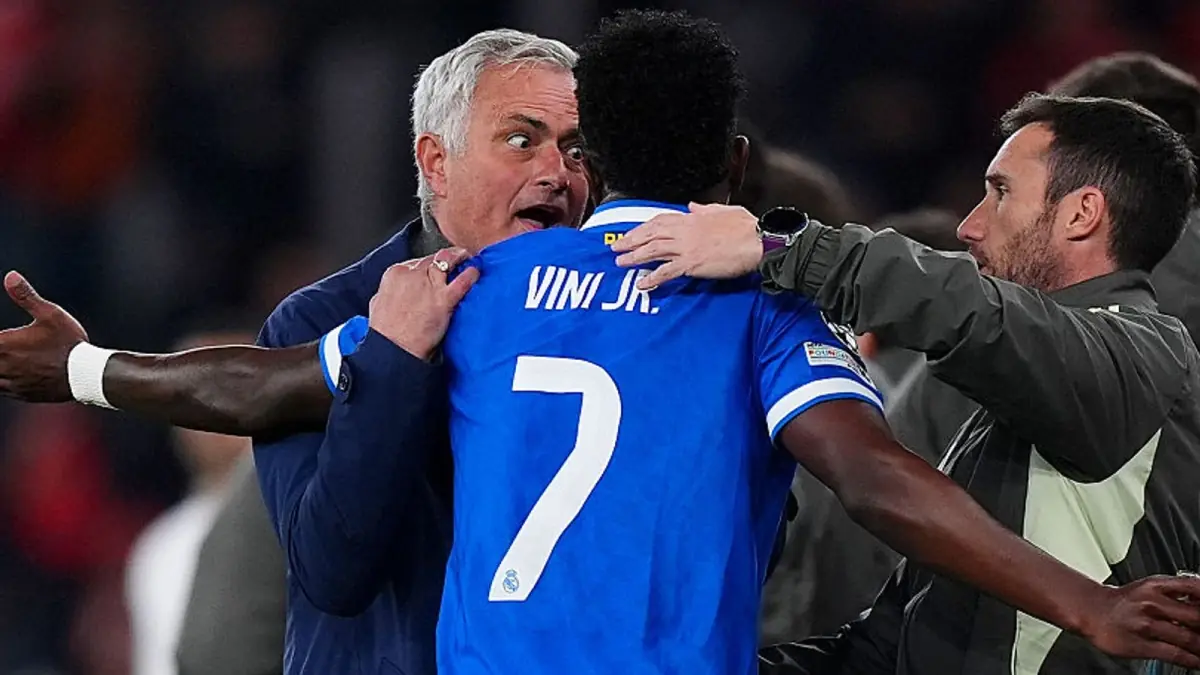
Real Madrid’s 1-0 victory in Lisbon was overshadowed by an on-field racial abuse allegation that prompted a lengthy stoppage and an immediate ethics investigation. The incident, which unfolded five minutes into the second half, saw the referee activate the anti-racism protocol after Real Madrid’s forward raised a complaint following his goal celebration.
What happened on the pitch
Confrontation broke out at the corner flag as a result of the goal celebration. After Vinícius Júnior allegedly heard a Benfica player use a racial epithet, he went to the referee. The referee used the globally famous motion to indicate that the anti-racism protocol had been triggered, and cameras caught the opposing player covering his mouth while he talked. Play was halted for roughly 10–11 minutes while players, coaches, and officials conferred. Tensions rose to the point that the visitors threatened to abandon the match; the coaching staff said they stood ready to back the player’s decision if he chose to walk off. The game eventually resumed and finished 1-0 to Real Madrid.
The player accused of the slur has denied the allegation and described the exchange as a misunderstanding. Club sources expressed full support for their player and warned of what they called a defamation campaign. Meanwhile, the accused player also said he had received threats following the incident.
Reactions and disciplinary outlook
Vinícius said the episode reiterated a familiar pattern and denounced racism as an act of cowardice, writing that those who insult others in that way must be weak. A high-profile teammate insisted the visiting squad would not tolerate racist behaviour and urged that the accused should not be allowed to play in the competition again. Benfica’s head coach commented that he wanted to remain balanced about the episode, noting the complexity of determining what was said in the heat of the moment. He also emphasised the club’s historical commitment to equality and suggested caution before drawing conclusions.
A disciplinary and ethics inspector has been assigned to look into the claim. A minimum of 10 matches will be suspended for any player found guilty of racist behaviour under the competition’s disciplinary system; additional sanctions may be imposed based on the investigation’s findings.
Questions over protocol and the wider fight against racism in football
Vinícius criticised what he called a poorly executed application of the anti-racism protocol. The stoppage followed the formal steps that require referees to halt play and make an announcement when discriminatory behaviour is alleged; if such behaviour does not stop, the match may be suspended for a reasonable period, and teams can be ordered to the dressing rooms while further action is taken. The episode revealed the emotional toll on the targeted players and also practical flaws in on-field enforcement, according to critics of the treatment. The episode highlights ongoing difficulties in providing prompt, transparent results that satisfy players, clubs, and supporters, despite the regulations’ proponents’ insistence that the procedure exists to provide clear, staged replies to suspected mistreatment.
With formal proceedings now underway, the governing body’s investigation will determine whether disciplinary measures are warranted. The case is likely to prompt renewed scrutiny of how anti-racism procedures are executed in high-stakes matches and whether additional safeguards are needed to protect players and uphold the integrity of the sport.