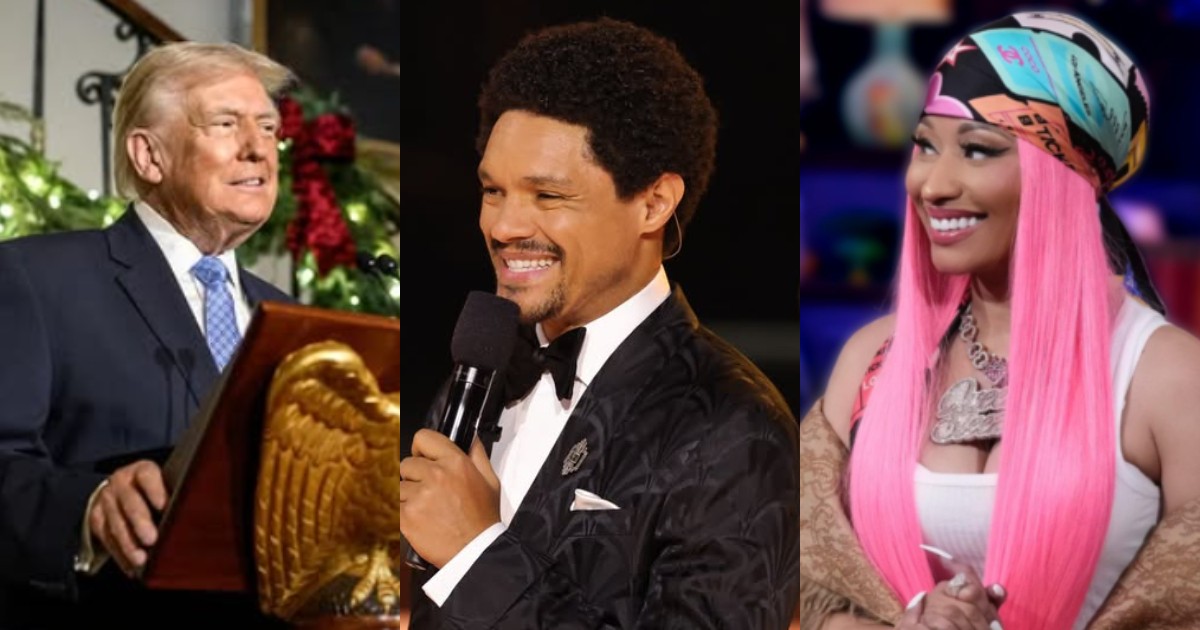
 The 2026 Grammy Awards were supposed to be a celebration of music’s biggest year. Instead, the night became a full-blown cultural lightning rod, thanks to an unexpected triangle of influence: Nicki Minaj, Donald Trump, and Trevor Noah. While none of them shared the stage at the same time, their combined presence, direct and indirect, fueled one of the most talked-about Grammys in recent memory.
Nicki Minaj didn’t need to perform or accept an award to dominate the narrative. Her name trended throughout the night as fans revisited long-standing debates about industry recognition, snubs, and respect for female rappers. Social media lit up with comparisons between winners and nominees, with many fans arguing that Nicki’s influence on modern rap still isn’t reflected fairly by award institutions.
As always, Nicki’s relationship with awards culture proved complicated. Whether through cryptic posts, fan-driven discourse, or past comments resurfacing at the perfect (or worst) moment, her presence loomed large, reinforcing the idea that at the Grammys, sometimes the loudest voice belongs to the artist who isn’t even in the room.
Adding fuel to the fire was the resurfacing of Donald Trump in Grammy-related conversation. While Trump was not part of the ceremony itself, references to him, whether through jokes, lyrics, commentary, or social media reactions, underscored how deeply politics and entertainment continue to collide.
The Grammys have increasingly become a space where cultural and political tensions bleed into music discourse, and 2026 was no exception. Mentions of Trump sparked predictable polarization online, with some viewers criticizing the awards for drifting too far into political symbolism, while others argued that music has always reflected the social climate, including uncomfortable conversations.
As host, Trevor Noah once again found himself walking a tightrope. Known for blending humor with cultural commentary, Noah’s presence was praised by some for keeping the night self-aware and timely, while others felt his approach highlighted the very divisions viewers were exhausted by.
In a year already charged with industry debates and political undercurrents, every joke landed louder and harder. Supporters applauded Noah’s ability to address the moment without derailing the show; critics accused the broadcast of prioritizing commentary over music. Either way, his role placed him squarely in the center of the post-Grammys conversation.
What made the 2026 Grammys different wasn’t a single scandal, speech, or snub; it was the convergence of influence. Nicki Minaj represented ongoing industry reckonings. Donald Trump symbolized the inescapable presence of politics in pop culture. Trevor Noah embodied the challenge of holding the center in a polarized moment.
Together, they turned the Grammys into more than an awards show. They made it a mirror reflecting fan frustration, cultural fatigue, loyalty, backlash, and the evolving role of entertainment in public life.
If the 2026 Grammys proved anything, it’s that music awards no longer exist in isolation. Artists, politicians, comedians, and audiences are all part of the same ecosystem now, where a trending name can matter as much as a trophy.
Love it or hate it, the drama ensured one thing: people were watching, talking, and arguing. And in today’s attention economy, that might be the most powerful award of all.
