

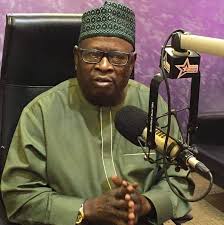
 The Member of Parliament for Zebilla, Cletus Apul Avoka, has attributed persistent distortions in public transport fares across the country to operator greed and weak regulatory systems, warning that commuters continue to suffer due to poor enforcement of fare regulations.
Speaking on the state of Ghana’s transport sector, the MP said that although transport fares are officially regulated through consultations between the government and transport unions, the lack of effective monitoring allows some operators to arbitrarily increase fares, especially during peak hours, festive seasons, and fuel price fluctuations. He noted that although the government has created an enabling environment for private sector participation, the absence of a strong regulatory and public transport framework has allowed unfair practices to thrive.
“Even in the market, with most imported goods, although the dollar has depreciated, prices remain high because people are not reducing their prices. This shows that there is some kind of greed in our system,” he said.
According to him, the situation points to entrenched greed within the system, urging the government to fix structural gaps rather than placing blame solely on individuals. He argued that without a well-organized and efficient public transport system, market forces alone will continue to disadvantage commuters.
The Zebilla MP maintained that a robust public transport system would naturally regulate excesses in the sector, as operators would be compelled to comply with rules to remain competitive and stay in business, calling on the government to prioritize reforms that enforce discipline and fairness, rather than relying on appeals to individual conscience.
While acknowledging challenges such as fuel price volatility and vehicle maintenance costs faced by drivers, Mr. Avoka insisted that these factors should not be used as excuses for indiscriminate fare hikes. He urged the government to strengthen oversight mechanisms and improve transparency in fare-setting processes to protect commuters.
The MP concluded by calling for a comprehensive review of transport regulation enforcement, saying sustainable solutions would require political will, stronger institutions, and cooperation among all stakeholders in the transport sector.
